
一、前言
在本文中,「荒原之梦考研数学」将为同学们汇总讲解初等矩阵的相关性质.
继续阅读“初等矩阵的性质汇总”置换矩阵这个概念在考研数学中并不常见,但却是 26 考研数学二真题中所考察过的一个知识点.
在这里,「荒原之梦考研数学」就帮助同学们深入理解一下什么是置换矩阵.
继续阅读“什么是置换矩阵?”
设函数 $f(x,y)$ 在区域 $D$ $=$ ${ (x,y) \mid 0 \leqslant x \leqslant 1, 0 \leqslant y \leqslant 1 }$ 上连续,且 $f(x,y)$ $=$ $f(y,x)$,则
$\iint \limits_{D} f(x,y) \mathrm{~d} x \mathrm{d} y$ $=$ $?$
 »A« $2 \lim_{n \rightarrow \infty} \sum_{i=1}^{n} \sum_{j=n+1-i}^{n} f \left( \frac{i}{n}, \frac{j}{n} \right) \frac{1}{n^{2}}$
»B« $\frac{1}{2} \lim_{n \rightarrow \infty} \sum_{i=1}^{n} \sum_{j=i}^{n} f \left( \frac{i}{n}, \frac{j}{n} \right) \frac{1}{n^{2}}$
»C« $2 \lim_{n \rightarrow \infty} \sum_{i=1}^{2n}\sum_{j=1}^{2n+1-i} f \left( \frac{i}{2n}, \frac{j}{2n} \right) \frac{1}{n^{2}}$
»D« $\frac{1}{2} \lim_{n \rightarrow \infty} \sum_{i=1}^{2n}\sum_{j=1}^{i} f \left( \frac{i}{2n}, \frac{j}{2n} \right) \frac{1}{n^{2}}$
已知函数 $f(x)$ $=$ $\int_{1}^{x^{3}} \frac{\mathrm{e}^{t}}{1+t^{2}} \mathrm{~d} t$,$f$ 的反函数为 $g$, 则( )
»A« $g(0)=1$, $g ^{\prime} (0) = \frac{3 \mathrm{e}}{2}$
»B« $g(0)=1$, $g ^{\prime} (0) = \frac{2}{3 \mathrm{e}}$
»C« $g(1)=0$, $g ^{\prime} (1) = \frac{3 \mathrm{e}}{2}$
»D« $g(1)=0$, $g ^{\prime} (1) = \frac{2}{3 \mathrm{e}}$
设函数 $f(x)$ 在区间 $[-1,1]$ 上有定义,则下列说法正确的是( )
»A« 若 $f(x)$ 在 $[-1,0)$ 上单调递减,在 $(0,1]$ 上单调递增,则 $f(x)$ 在 $x=0$ 处取极小值.
»B« 若 $f(x)$ 在 $x=0$ 处取极小值,则 $f(x)$ 在 $[-1,0)$ 上单调递减,在 $(0,1]$ 上单调递增.
»C« 若 $f(x)$ 在 $[-1,1]$ 上是凹函数,则 $\frac{f(x)-f(1)}{x-1}$ 在 $[-1,1)$ 上单调递增.
»D« 若 $\frac{f(x)-f(1)}{x-1}$ 在 $[-1,1)$ 上单调递增,则 $f(x)$ 在 $[-1,1]$ 上是凹函数.
设线密度为 $1$ 的细直棒的两个端点分别位于点 $\left( -1, 0 \right)$ 和点 $\left( 1, 0 \right)$ 处,质量为 $m$ 的质点位于点 $\left( 0, 1 \right)$ 处,$G$ 为引力常数,则该细直棒对该质点的引力大小为( )
»A« $\int_{0}^{1} \frac{2Gmx}{(x^{2}+1)^{\frac{1}{2}}} \mathrm{~d}x$
»B« $\int_{0}^{1} \frac{2Gm}{(x^{2}+1)^{\frac{1}{2}}} \mathrm{~d}x$
»C« $\int_{0}^{1} \frac{2Gmx}{(x^{2}+1)^{\frac{3}{2}}} \mathrm{~d}x$
»D« $\int_{0}^{1} \frac{2Gm}{(x^{2}+1)^{\frac{3}{2}}} \mathrm{~d}x$
难度评级:
继续阅读“2026年考研数二第04题解析:定积分的物理应用”$$
\begin{vmatrix}
\boldsymbol{D}
\end{vmatrix} = \begin{vmatrix}
1 & -1 & 1 & x-1 \\ 1 & -1 & x+1 & -1 \\ 1 & x-1 & 1 & -1 \\ x+1 & -1 & 1 & -1
\end{vmatrix} = ?
$$
设函数 $z$ $=$ $z(x,y)$ 由方程 $x – az$ $=$ $\mathrm{e}^{y+az}$($a$ 是非零常数)确定,则:
»A« $\frac{\partial z}{\partial x} – \frac{\partial z}{\partial y} = \frac{1}{a}$
»B« $\frac{\partial z}{\partial x} + \frac{\partial z}{\partial y} = \frac{1}{a}$
»C« $\frac{\partial z}{\partial x} – \frac{\partial z}{\partial y} = -\frac{1}{a}$
»D« $\frac{\partial z}{\partial x} + \frac{\partial z}{\partial y} = -\frac{1}{a}$
对于一个二元隐函数(或者说二元方程式) $F(x, y) = 0$, $y = y(x)$ 而言,对 $x$ 求导(全导数)的公式的一般推导过程如下:
$$
\begin{aligned}
& F \left( x, y \right) = 0 \\ \\
\textcolor{lightgreen}{ \leadsto } \ & \frac{\mathrm{d} F \left( x, y \right)}{\mathrm{d} x} = 0 \\ \\
\textcolor{lightgreen}{ \leadsto } \ & \textcolor{orange}{ F^{\prime}_{x} \left( x, y \right) + F^{\prime}_{y} \left( x, y \right) \frac{\mathrm{d} y}{\mathrm{d} x} = 0 } \\ \\
\textcolor{lightgreen}{ \leadsto } \ & \frac{\mathrm{d} y}{\mathrm{d} x} = \frac{- F^{\prime}_{x} \left( x, y \right)}{F^{\prime}_{y} \left( x, y \right)}
\end{aligned}
$$
其中,$F^{\prime}_{y} \left( x, y \right) \neq 0$.
当然,我们也可以简写成下面的形式:
$$
\begin{aligned}
& F \left( x, y \right) = 0 \\ \\
\textcolor{lightgreen}{ \leadsto } \ & \frac{\mathrm{d} F}{\mathrm{d} x} = 0 \\ \\
\textcolor{lightgreen}{ \leadsto } \ & \textcolor{orange}{ F^{\prime}_{x} + F^{\prime}_{y} \frac{\mathrm{d} y}{\mathrm{d} x} = 0 } \\ \\
\textcolor{lightgreen}{ \leadsto } \ & \frac{\mathrm{d} y}{\mathrm{d} x} = \frac{- F^{\prime}_{x} }{F^{\prime}_{y} }
\end{aligned}
$$
其中,$F^{\prime}_{y} \neq 0$.
此外,还可以写成下面的形式:
$$
\begin{aligned}
& F \left( x, y \right) = 0 \\ \\
\textcolor{lightgreen}{ \leadsto } \ & \frac{\mathrm{d} F}{\mathrm{d} x} = 0 \\ \\
\textcolor{lightgreen}{ \leadsto } \ & \textcolor{orange}{ \frac{\partial F}{\partial x} + \frac{\partial F}{\partial y} \frac{\mathrm{d} y}{\mathrm{d} x} = 0 } \\ \\
\textcolor{lightgreen}{ \leadsto } \ & \frac{\mathrm{d} y}{\mathrm{d} x} = \frac{- \partial F / \partial x }{ \partial F / \partial x }
\end{aligned}
$$
其中,$\frac{\partial F}{\partial x} \neq 0$.
可以看到,要理解上面的公式,最主要的就是要理解 $\frac{\partial F}{\partial x}$ $+$ $\frac{\partial F}{\partial y} \frac{\mathrm{d} y}{\mathrm{d} x}$ $=$ $0$ 这个式子是怎么来的.
在本文中,「荒原之梦考研数学」将通过一些实例,以递进式的方式,为同学们讲清楚上面这个式子的由来.
继续阅读“由方程式确定的隐函数求导公式的“实例递进式”推导”计算行列式 $\begin{vmatrix} \boldsymbol{D} \end{vmatrix}$ $=$ $\begin{vmatrix} \alpha & \beta & \gamma \\ \gamma & \alpha & \beta \\ \beta & \gamma & \alpha \end{vmatrix}$, 其中 $\alpha$, $\beta$, $\gamma$ 是方程 $x^{3} + px + q$ $=$ $0$ 的三个根.
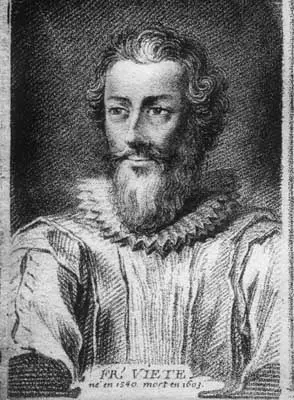
继续阅读“使用韦达定理求解行列式的值”韦达定理描述了多项式方程的根与方程系数之间的关系. 由于该定理由法国数学家弗朗索瓦·韦达首次发现,因此得名.
在「荒原之梦考研数学」的《齐次函数详解与示例》这篇文章中,我们以定义和示例的方式理解了什么是齐次函数,在本文中,我们将通过四则运算的运算律和峰式图两种方式,来深入理解齐次函数的本质机制.
继续阅读“峰图 | 齐次函数本质机制的两种解释”