
问题
根据【原函数的性质】判断原函数是否存在,以下哪个选项是正确的?选项
[A]. 可导函数一定存在原函数[B]. 不连续函数一定存在原函数
[C]. 连续函数一定存在原函数
[D]. 不可导函数一定存在原函数
连续函数一定存在原函数.
解释:
连续函数在其定义域上一定是可积的,因此,根据不定积分的定义可知,连续函数(该函数不一定处处可导)一定存在原函数.
此外,由于可导一定连续,因此,可导函数也一定存在原函数.
輔助圖像
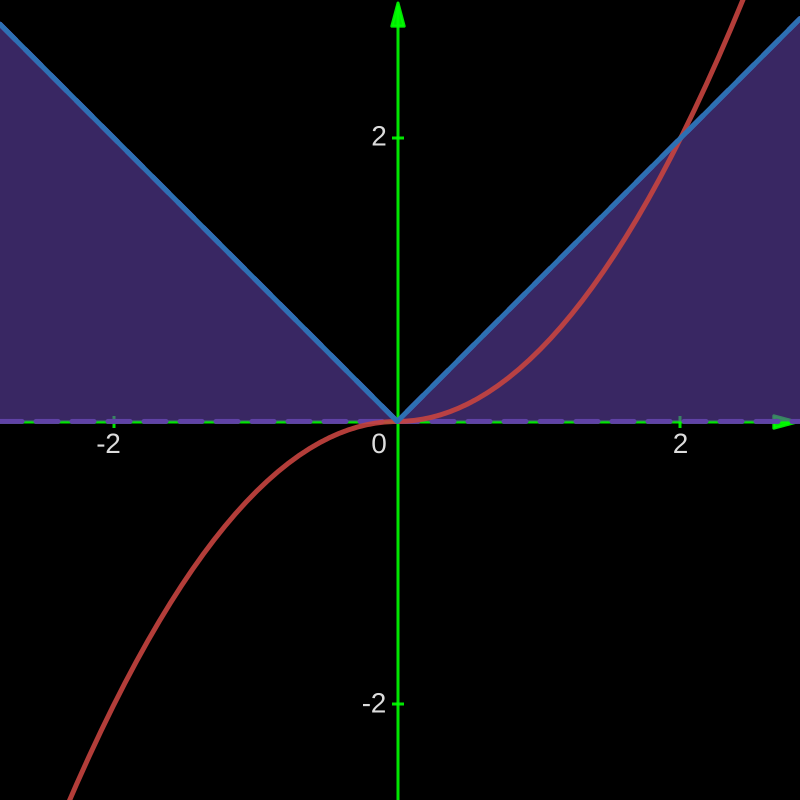


连续函数一定存在原函数.
解释:
连续函数在其定义域上一定是可积的,因此,根据不定积分的定义可知,连续函数(该函数不一定处处可导)一定存在原函数.
此外,由于可导一定连续,因此,可导函数也一定存在原函数.
简洁版:
$F'(x)$ $=$ $f(x)$ $\color{Red}{\Rightarrow}$ 函数 $F(x)$ 是函数 $f(x)$ 的原函数
完整版:
设$f(x)$ 是定义在区间 $U$ 上的一个函数,如果存在 $\forall$ $x$ $\in$ $U$, 都有 $F'(x)$ $=$ $f(x)$ 或者 $\mathrm{d} F(x)$ $=$ $f(x) \mathrm{d} x$, 则称 $F(x)$ 是 $f(x)$ 在区间 $U$ 上的一个原函数.
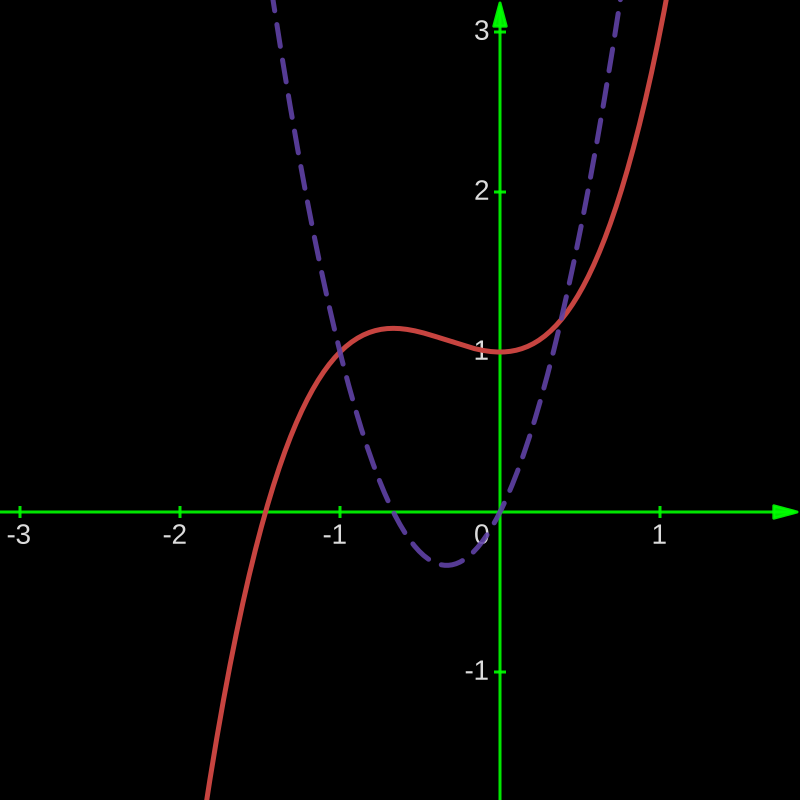
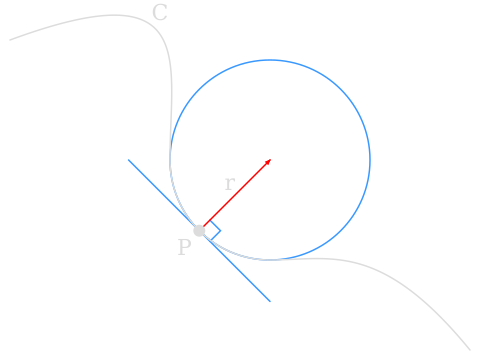
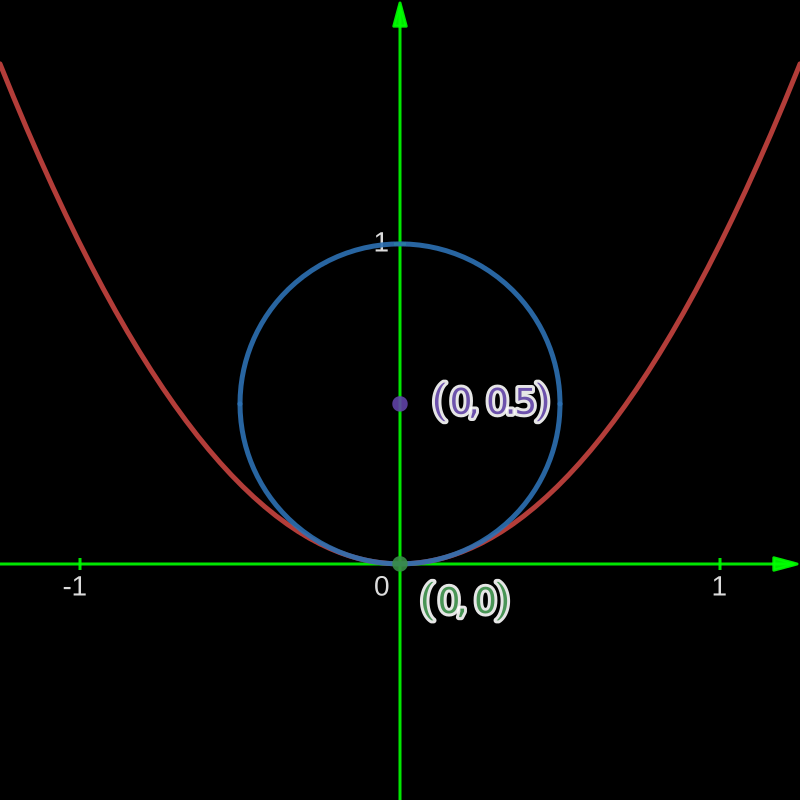
$R$ $=$ $\frac{1}{k}$ $=$ $\frac{(1 + y’ ^{2})^{\frac{3}{2}}}{|y”|}$, $k$ $\neq$ $0$.
关于曲率的计算方法可以查看荒原之梦网(zhaokaifeng.com)的这篇文章:
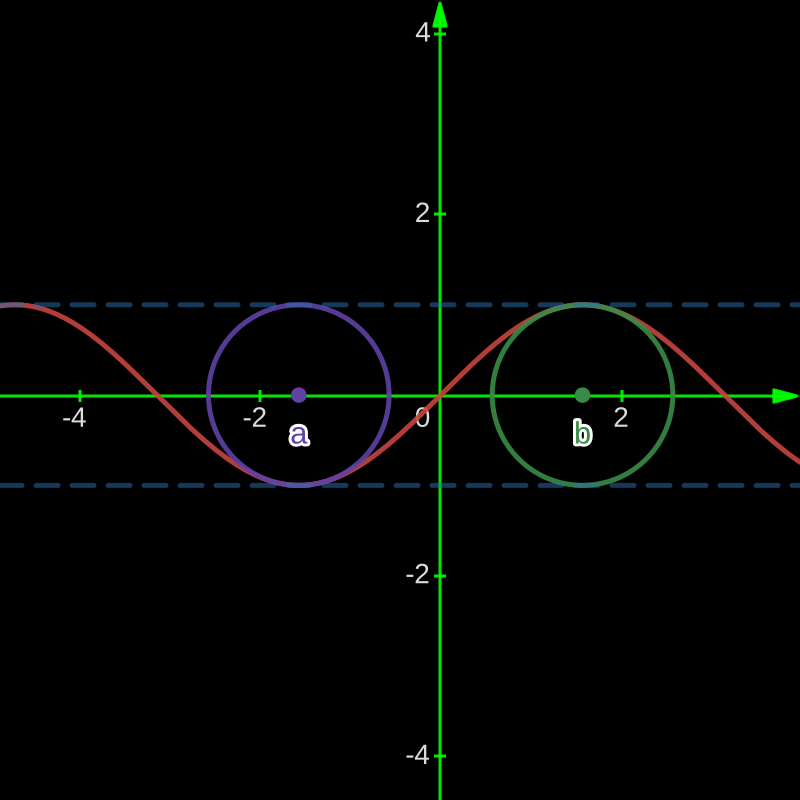
$k$ $=$ $\frac{|y”|}{(1+y’ ^{2})^{\frac{3}{2}}}$
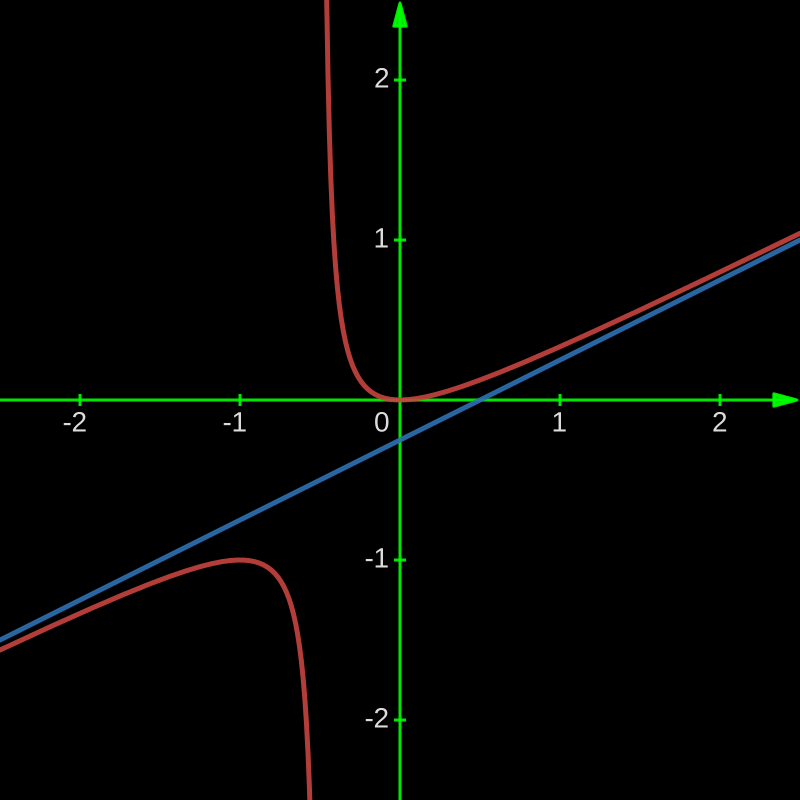
如果 $k$ $=$ $\lim_{x \rightarrow + \infty}$ $\frac{f(x)}{x}$ 且 $b$ $=$ $\lim_{x \rightarrow + \infty}$ $[$ $f(x)$ $-$ $kx$ $]$, 或者 $k$ $=$ $\lim_{x \rightarrow – \infty}$ $\frac{f(x)}{x}$ 且 $b$ $=$ $\lim_{x \rightarrow – \infty}$ $[$ $f(x)$ $-$ $kx$ $]$,则直线 $y$ $=$ $kx$ $+$ $b$ 就是曲线 $y$ $=$ $f(x)$ 的倾斜渐近线.
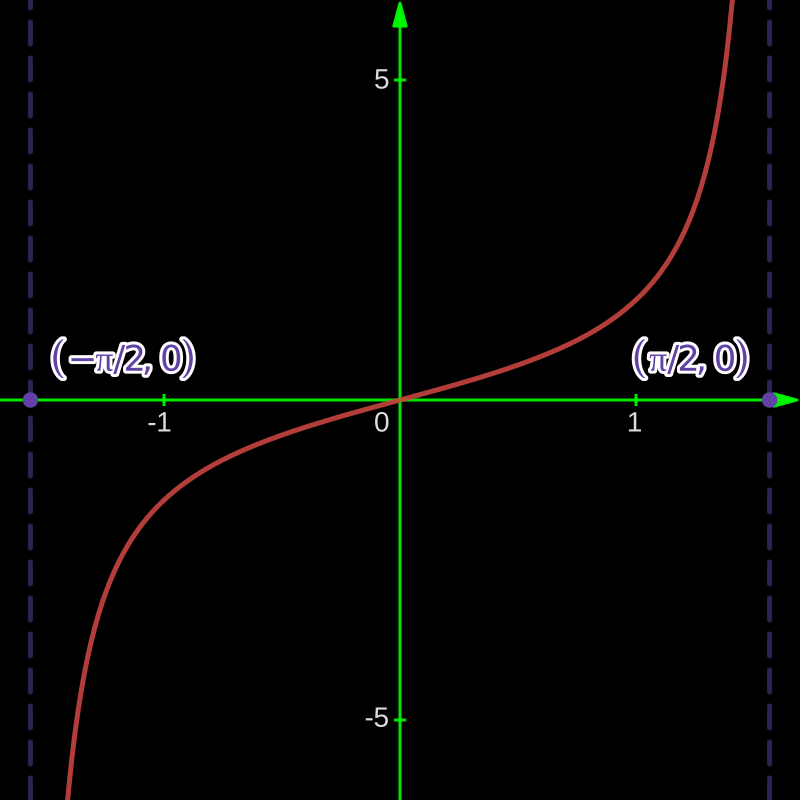
$\lim_{x \rightarrow x_{0}^{-}}$ $f(x)$ $=$ $\infty$ 或 $\lim_{x \rightarrow x_{0}^{+}}$ $f(x)$ $=$ $\infty$ $\color{Red}{\Rightarrow}$ $x$ $=$ $x_{0}$ 是函数 $f(x)$ 的垂直渐近线.
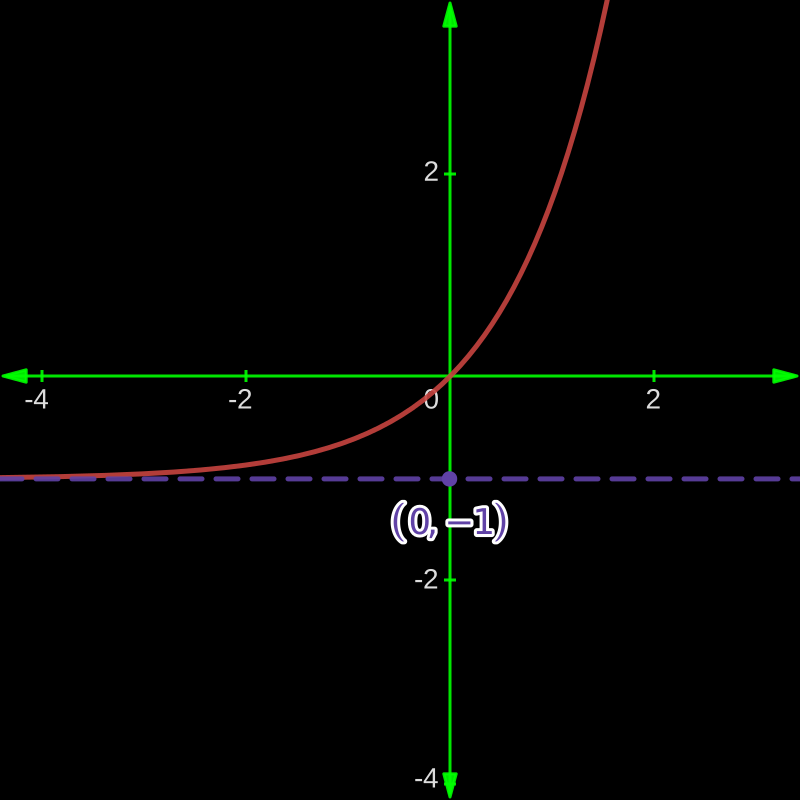
$\lim_{x \rightarrow + \infty}$ $f(x)$ $=$ $a$ 或 $\lim_{x \rightarrow – \infty}$ $f(x)$ $=$ $a$ $\color{Red}{\Rightarrow}$ $y$ $=$ $a$ 是函数 $f(x)$ 的水平渐近线
$f”(x_{0})$ $=$ $0$ 且 $f”'(x_{0})$ $\neq$ $0$ $\color{Red}{\Rightarrow}$ 点 $(x_{0}, f(x_{0}))$ 为函数 $f(x)$ 的一个拐点.
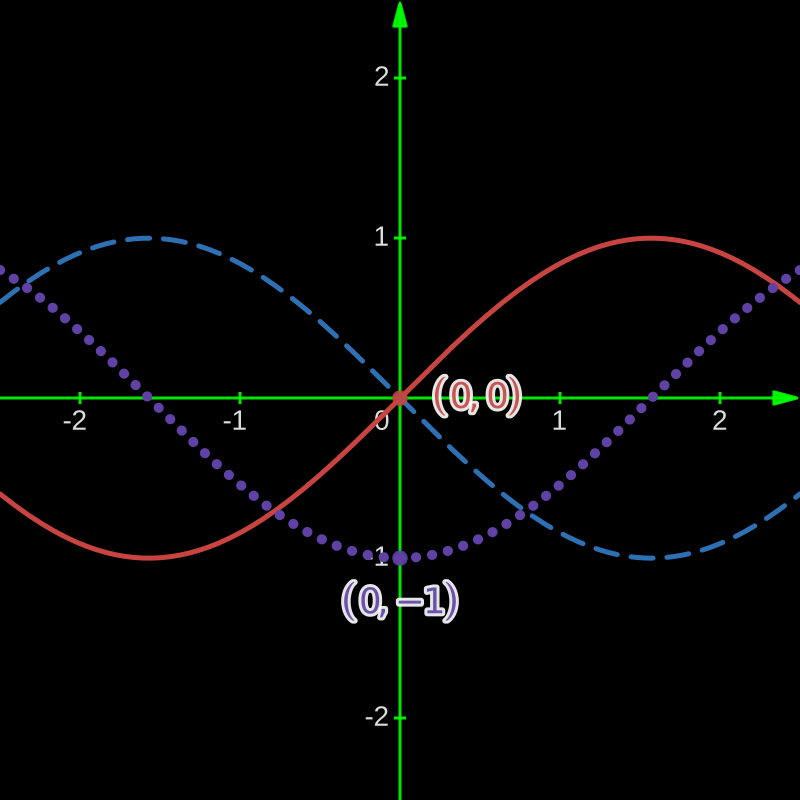
如果函数 $f(x)$ 在点 $x_{0}$ 处有 $f”(x_{0})$ $=$ $0$, 或者,虽然 $f”(x_{0})$ 不存在,但函数 $f(x)$ 在点 $x_{0}$ 处连续,那么,如果再可知,$f”(x)$ 在点 $x_{0}$ 的左右两侧邻域内异号,则可以判断,坐标点 $(x_{0}, f(x_{0}))$ 为函数 $f(x)$ 的一个拐点.
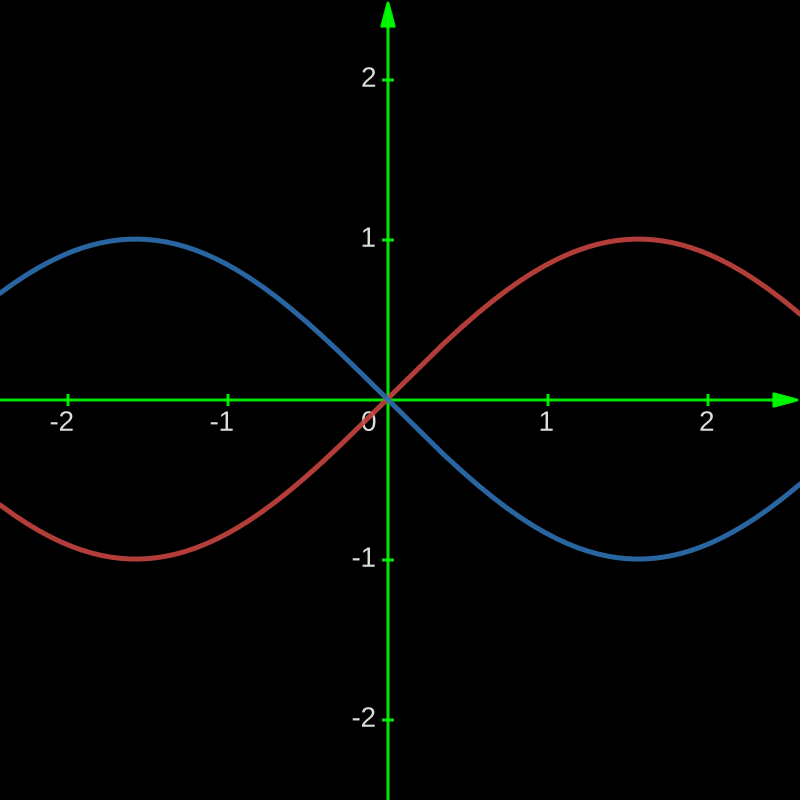
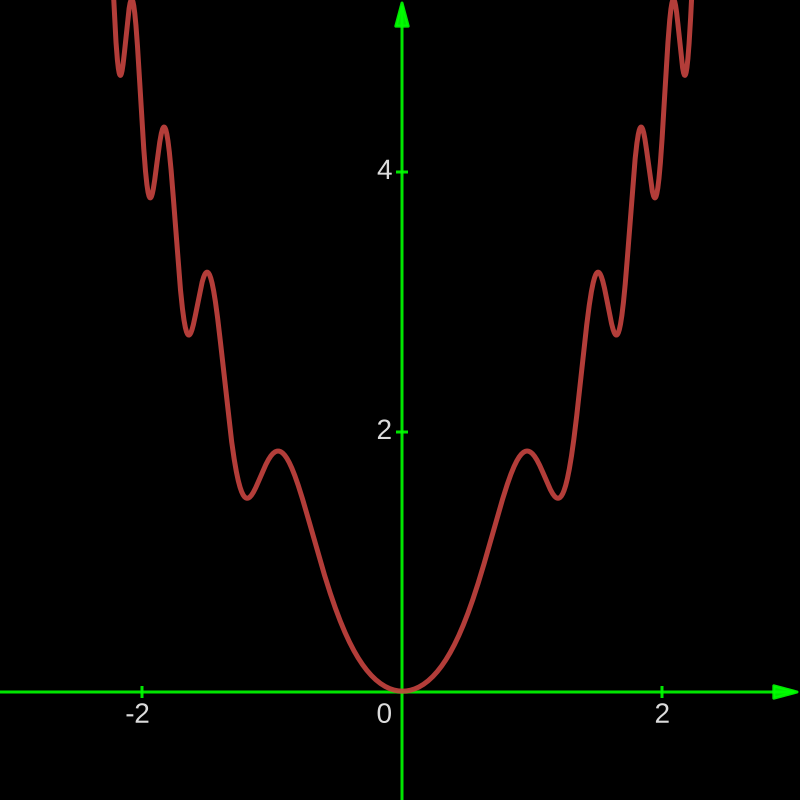
如果函数 $f(x)$ 的【凹凸】性在过点 $(x_{0}, f(x_{0}))$ 的时候发生了改变,则称点 $(x_{0}, f(x_{0}))$ 是该函数的一个拐点.
关于什么是拐点,可以参考荒原之梦网的这篇文章:《什么是驻点和拐点?》
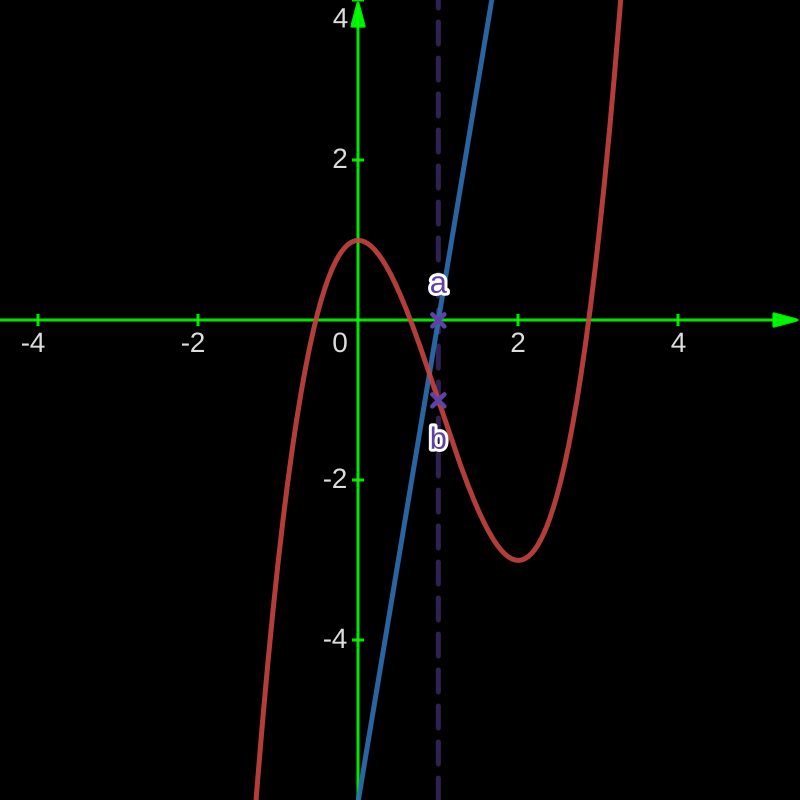
$f(\frac{x_{1} + x_{2}}{2})$ $<$ $\frac{f(x_{1}) + f(x_{2})}{2}$ $\color{Red}{\Rightarrow}$ $f(x)$ 在区间 $U$ 上是凹的.
$f(\frac{x_{1} + x_{2}}{2})$ $>$ $\frac{f(x_{1}) + f(x_{2})}{2}$ $\color{Red}{\Rightarrow}$ $f(x)$ 在区间 $U$ 上是凸的.
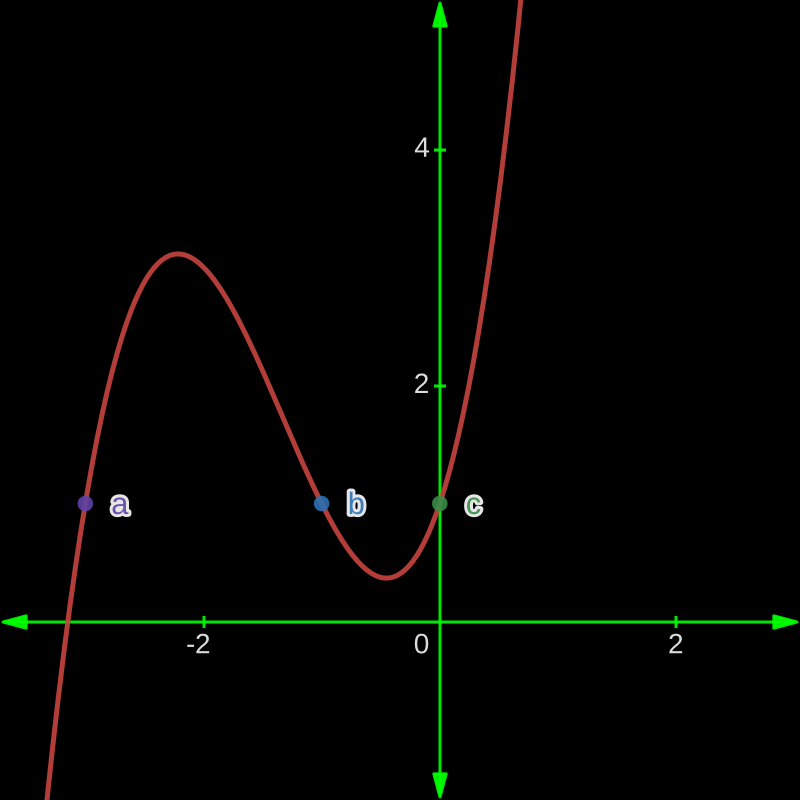
若当 $x$ $\in$ $\mathring{U(x_{0})}$ 时,$f'(x)$ 不变号,则表明函数 $f(x)$ 在点 $x_{0}$ 处一定不取得极值.
当 $f^{\prime \prime}(x_{0})$ $<$ $0$ 的时候,函数 $f(x)$ 在点 $x_{0}$ 处取得极大值.
当 $f^{\prime \prime}(x_{0})$ $>$ $0$ 的时候,函数 $f(x)$ 在点 $x_{0}$ 处取得极小值.
注意:若 $f^{\prime \prime}(x_{0})$ $=$ $0$, 则极值不存在,因此,只有当 $f^{\prime \prime}(x_{0})$ $\neq$ $0$, 极值才【有可能】存在.